

Busy Bee Training Institute (BBTI) is an educational institution specializing in providing comprehensive training programs and face-to-face courses in the food and beverage industry. With a strong commitment to excellence and a focus on practical skills development, BBTI has established itself as a leading institution in the field.
Busy Bee Training Institute (BBTI) offers a range of training programs tailored to meet the needs of aspiring professionals or individuals already working in the food and beverage sector. The institute aims to enhance the knowledge, skills and professionalism of its students, enabling them to excel in their careers within the industry.
Beverage Management: Busy Bee Training Institute (BBTI) provides specialised training in beverage management including courses on bar operations, mixology and beverage pairing.
Students gain knowledge in areas such as bartending techniques, drink recipes and customer service.
Busy Bee Training Institute (BBTI) is dedicated to providing quality education and training, with its experienced instructors who posses extensive industry knowledge. By maintaining strong connections with professional and organizations in the food & beverage sector, BBTI ensures that its training programs remain relevant and up to date with industry standards and practices.
Overall, Busy Bee Training Institute (BBTI) plays a vital role in the development and advancement of individuals pursuing careers in the food & beverage industry. Its comprehensive training programs, focus on practical skills and commitment to excellence make it s respected institution in the field.
Contact email: complaints@busybee.com.mt
The mission of Busy Bee Training Institute is to empower individuals with the knowledge, skills, and confidence needed to excel in their chosen fields. Through instruction, practical experience, and a supportive learning environment, we strive to cultivate lifelong learners who are equipped to positively impact their communities and achieve their professional goals.
Applicants do not need to possess any particular qualifications to apply.
Curiosity and ability to grasp and apply new concepts effectively towards the subject matter or field of study.
Effective communication skills both verbal and written, enabling clear expression of ideas and the ability to articulate concepts to others.
Commitment to diversity, equity and inclusion, fostering a welcoming and supportive.
Designed to introduce trainees to the world of coffee
Trainees will achieve basic factual knowledge in connection with Barista skills required in a professional coffee bar operation
rainees will be provided with adequate basic and practical skills required to carry out tasks connected with coffee preparation as well solving routine problems with basic making skills
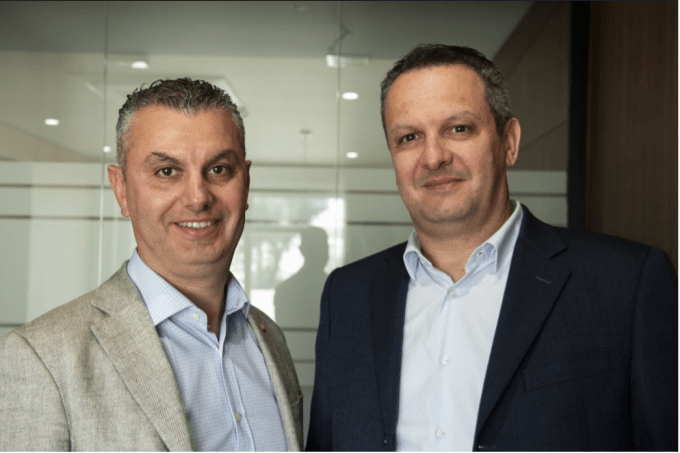
As Directors, we provide strategic guidance and set the overall direction of the company, leading a team of talented professionals to ensure seamless operations and optimal business performance. Our visionary leadership style fosters a culture of creativity, teamwork and customer-centricity, allowing the company to continually surpass expectations and deliver unforgettable experiences.
brian@busybee.com.mt
gfriggieri@busybee.com.mt
complaints@busybee.com.mt

As Head of School, I foster professionalism and ethical conduct in the Institute, stimulate and participate in the dialogue about teaching and learning and offer long term support, encouragement lead in accessing, analysing and interpreting information to inform planning for improvement.
luke@busybee.com.mt
complaints@busybee.com.mt
The BBTI Management admits applicants as per guidelines for the awards offered. Students will be informed by e-mail when accepted to attend the award.
The above requirements are applied consistently and in a transparent manner as records are well kept.
BBTI provides clear, accurate and timely information to its stakeholders about key academic dates and deadlines.
BBTI administration, in consultation with the BBTI Head will issue the academic calendar on the website and send an e-mail to Direct Superiors of staff about the academic calendar dates.
The Calendar is an ongoing exercise by the administration as the needs of staff are taken into consideration.
BBTI continuously monitors the awards in tandem with the lecturers and students.
BBTI will review every 5 years the awards through:
BBTI Head and Directors will make a review and take any action as necessary after having gone through the above points.
The procedure for review of awards applies to all staff and a representative from the Sectoral skills council involved in the delivery and addresses stages for enhancement.
The planning is carried out in teams made up of lecturers and the Sectoral skills Council representative and a report is issued annually to the Head.
BBTI will accept new awards where appropriate according to the mission of BBTI.
BBTI will evaluate all demands coming from any stakeholder as regards to new ideas for new awards.
The Demand must be in line with the mission and vision of BBTI and must also be in line with the current available physical and human resources.
The Directors after consulting with the BBTI Head will give the final go ahead for an award to be given and added to the calendar dates.
BBTI is against plagiarism and conducts a procedure in place for written assignments.
Staff and students are made aware that plagiarism is not accepted through a Welcome e mail with reference to the Policy and Procedure on the website.
In the case the BBTI and the lecturer find evidence that students work has been plagiarized then the student will be informed by an e mail.
Plagiarism will be examined through Google Plagiarism checker.
BBTI is to ensure that the credentials and credits are in line with the Malta Further and Higher Education Authority Malta.
The BBTI credentials and credits are verified through a procedure by the Malta Further and Higher Education Malta.
The Awards have credits allocated. The Award has to be completed in time according to the dates as stipulated by BBTI unless there is a need for a mitigating circumstance.
BBTI supports students who have issues related to their lifestyle or medical problems.
A mitigating circumstance is an unforeseen or unpreventable situation which hinders the student from performing according to the academic calendar. The following are examples but not limited to:
The student must inform BBTI through e-mail about such circumstances.
The BBTI will take a decision within 5 working days and inform the student by e mail accordingly about the decision taken.
The BBTI invests in the latest affordable technology for the website.
BBTI policy is to provide a safe, healthy and clean environment during practical sessions for students to be able to reach all learning outcomes and for award participants to be active in their own learning.
The procedure is to have the Lecturer agree in principle about the facility resources before the start of an award and to state to the Head and administration that all required resources for learning are in place.
The Lecturer is responsible for planning, providing a scheme of work, formative and summative assessment and engaging students effectively.
The assessment as part of the practical Policy and Procedure is guided by the Lecturer.
BBTI believes in freedom of expression. However, the written word sometimes seems harsher than the spoken word.
All stakeholders must abide by the policies and procedures as part of ethics.
Anyone can raise an ethics breach through complaints@busybee.com.mt
If ethics are breached the BBTI have the right to enforce disciplinary procedures.
The appeals procedure is through the Ombudsman: https://www.ombudsman.org.mt/
The Policy of the BBTI is to ensure dignity and no discrimination in line with the laws of Malta.
Complaints can be sent to complaints@busybee.com.mt.
Appeals may be taken to the Ombudsman.
BBTI follows Chapter 413 Equal Opportunities of the Laws of Malta.
Concerns may be raised directly with the Head or Director.
The BBTI believes in recruiting the most qualified and experienced staff.
Staff are selected based on CV, qualifications, experience and interview.
BBTI maintains a high academic standard and expects fairness, honesty and consistency.
Written material outlining assessment tasks is provided to students.
Students who are dissatisfied with an assessment have a right to complain and appeal.
Complaints must be submitted through complaints@busybee.com.mt.
This policy outlines the process for the development, review, and continuous improvement of courses.
This policy applies to all Food and Beverage courses offered by BBTI.
The institution is committed to delivering high-quality education aligned with industry standards.
Internal Stakeholders
External Stakeholders
To ensure that all assessments are valid, reliable, and fair.
Applies to all forms of assessments within BBTI.
Assessments must accurately measure learning outcomes and be consistent.
Validity
Reliability
This policy will be reviewed every five years or earlier if required.
Busy Bee Training Institute is a licensed Further Education Institution dedicated to Food & Beverage programmes.
Our Mission: to enhance the competence of internal staff and the general public in the Food & Beverage industry.
Our Vision: to contribute to the development of quality in Food & Beverage service.
Our Values: excellence, integrity, innovation, teamwork, passion and respect which means improving continuously, acting professionally, taking on new challenges, acknowledging co-operation, performing with positive emotions, recognising dignity and diversity.
Busy Bee Training Institute operates the plan, do, check, act (PDCA) cycle and abides by the MFHEA 11 standards. The PDCA cycle is applied to teaching and learning, management and administration.
Busy Bee Training Institute has good academic governance and appropriate responsibilities as much as adequate policies and procedures as seen on website. All of this is reflected through learning and teaching with adequate assessment “of” and “for” learning including good student support.
Busy Bee Training Institute checks these through its internal quality assurance consultant and through student and lecturers’ feedback. This is constantly enhanced through staff professional development, staff appraisals and follow up feedback on the students’ questionnaires and involvement of discussions and seminars created to keep up to date.
Busy Bee Training Institute has a fit for purpose organigram which makes it financially sustainable with qualified staff and by allocating the right budget.
Since Busy Bee Training Institute is a small institution, quality assurance is a shared responsibility overseen by the Directors, the Head and the quality assurance consultant.
The success of a quality culture lies entirely with every staff member of Busy Bee Training Institute including the students and the stakeholders. The administration itself and other support services form part of this quality since they bear an essential part in supporting students in their studies and their learning environment.
Related documents to the QA policy are all the other Policies and Procedures in place which cover all MFHEA 11 standards.
Busy Bee Training Institute contacts their staff directly for the continuous professional development accredited awards. There are no entry requirements for the Programmes since they are internal CPDs.
The Administration keeps all students records so that progression can be communicated to the student through email till graduation.
Assessment methods are both formative and summative and communicated beforehand to students by their respective lecturers. Assessment methods are overseen by the Head and Internal quality consultant for home grown courses.
Students receive a questionnaire about their programme of study depending on when their programme ends. The questionnaire is disseminated by the administration and received by the administration.
All questionnaires are anonymous and serve as student feedback to Busy Bee Training Institute.
The Directors and the Head discuss the questionnaire responses with the Internal Quality consultant and the result is communicated back to the students.
The Award reviews are carried out every 5 years and include reports of the yearly ongoing monitoring. A calendar is set to indicate which programmes are reviewed per year. All necessary stakeholders are involved in reviews.
Busy Bee Training Institute has a student centered system starting from the fact that all awards have their learning outcomes and credits and take great care of the workload spread for the student.
Moreover, it has a Mitigating policy to support students in times of difficulty. Student centred is explained in more detail under Standard 4.
Several support services exist for the student. A student can always refer to these support services including guidance from the Administration.
The best student support comes from the good relationship created between Lecturer and student. Lecturers also informally chat with students as part of the Busy Bee Training Institute culture to assist them in best way to learn.
Busy Bee Training Institute has its own website for public information and also social media.
All necessary information about the programmes including ECTS, credits and home-grown Awards are public information.
Busy Bee Training Institute carries out a yearly Institutional self-assessment report under the guidance of the Internal Quality Consultant.
This report is discussed by all staff and used to create any necessary Action plans.
The Monitoring tools for quality assurance are:
MQF/EQF Level 1:
All programmes are carried out at the Central Business District Zone 4 Mdina Road B’Kara.
All Awards are found on the website: www.busybee.com.mt
Busy Bee Training Institute is a non-profit making Institute sponsored by the Busy Bee Group to sustain workforce development through CPDs.
Contact email: complaints@busybee.com.mt
|
Uploaded
Failed
|
 |